Travelers Rest's Penny Tax Credit Is Sized by Taxable Value, and That Favors Recent Buyers
October 15, 2026
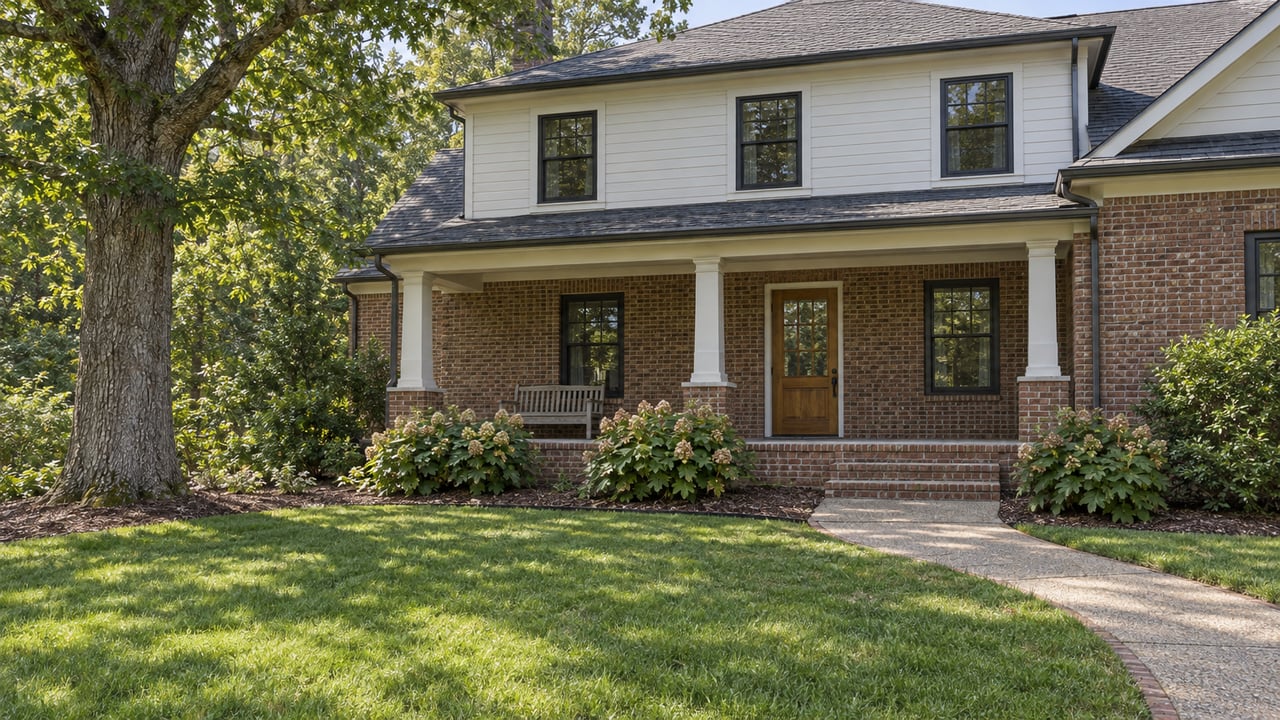
October 15, 2026
The City of Travelers Rest put two sample tax bills in its August presentation on the proposed penny sales tax. One home has a taxable value of $75,680 and an estimated homeowner credit of $84.16. The other has a taxable value of $616,980 and an estimated credit of $686.08.
The slide for the smaller bill is labeled "lower taxable market value than fair market value." In other words, its value on the tax rolls sits well below what it would likely sell for. If the vote passes, that gap decides how much relief a household gets. It also shapes what a buyer comparing Upstate towns would actually pick up from the measure on the November 3, 2026 ballot.
The Travelers Rest Homeowner Tax Relief and Critical Project Sales Tax Referendum asks voters whether to add a 1% sales and use tax inside city limits for up to eight years. It's possible under the state's new Municipal Tax Relief Act, Act No. 228 of 2026. That law requires at least 20% of collections to fund a nonrefundable credit against municipal property tax. The credit can go only to property assessed under Section 12-43-220(c), which is the owner-occupied legal residence class assessed at 4%.
That's a narrow group. A rental house, a second home, or a home the owner never registered as a legal residence falls outside it. The credit also applies only to the city's portion of the tax bill. County and school district taxes stay as they are.
For buyers, this lines up with a step in the closing process. Under state law, the 4% owner-occupied ratio isn't automatic for a new owner. The owner has to apply for it. The City says the credit would be "applied automatically" to owner-occupied homes. In practice, "automatic" means automatic for properties already in that class. So the legal residence application is now tied to two things: the lower assessment ratio and, if the vote passes, a share of sales tax relief.
The City's FAQ gives a simple planning formula. Take a home's taxable value and multiply it by 0.0011120.
| Taxable home value | Estimated annual credit |
|---|---|
| $150,000 | $166.80 |
| $250,000 | $278.01 |
| $400,000 | $444.81 |
| $500,000 | $556.01 |
The City calls these planning estimates that "are subject to change depending on revenue generation and property tax values." The base of the formula matters more than the per-dollar factor. The statute defines "property tax value" as fair market value "as it may be adjusted downward" by South Carolina's reassessment cap.
Here's how that cap works for a homeowner who stays put:
The County's own example has neighbors with $600 and $900 tax bills, and the difference comes down to one buying in 2015 and the other in 2021. The penny tax credit carries that same gap into the relief. Two similar houses on the same block would get different credits. The one that sold most recently would usually get more, because its taxable value was reset to market most recently.
For a buyer, that changes how to read the City's table. A home bought in Travelers Rest in 2026 would enter the credit pool at close to its purchase price. A home held for decades enters at a value that the cap and the 2025 countywide reassessment have kept below market.
The City's case for the measure rests on who pays the sales tax. The August presentation estimates that about $61 of every $100 in taxable retail sales in Travelers Rest comes from people who don't live in the city. That breaks down to about 46% from regional shoppers and day visitors and 15% from overnight tourism. It says 61% of the city's 6.78 million visits come from outside ZIP code 29690. WSPA reported that Council Member Grant Bumgarner said visitors could help pay for property tax relief.
The tax would apply to prepared food, retail and home goods, and other discretionary purchases. Gas at the pump, rent and mortgage payments, utilities, most groceries, and prescriptions would be exempt.
The City also did the math for an average household. At the average taxable home value of $258,431, the estimated credit is $287.38. A resident would have to spend $28,738 a year on taxable purchases inside city limits before the extra penny cost as much as the credit returns. At the average home value of $324,500, those figures are $360.85 and $36,085. The City's slide sums it up with "No single net benefit." How a household comes out depends on its taxable value and on how much it spends in town.
Put the pieces together. A renter living in town would pay the penny and get no credit. A homeowner who lives here and spends little in town, with a recently reset taxable value, would likely come out ahead. The City estimates the yearly relief pool at $438,257. That money would be split among a fixed set of qualifying homes in proportion to their taxable values.
The City estimates collections of about $2,191,285 a year, with about $1,753,028 left for capital projects after the credit. Over eight years, that comes to roughly $3.9 million in relief and $15.8 million in projects. The ballot locks in the categories:
If the measure passes, the City can spend the money only on the projects listed on the ballot. The project list puts Tier 1 around Gateway Park and the trail. It includes the Gateway Skate Park, Gateway Stadium Seating, Gateway Pickleball Courts, a Center Street connection to the Swamp Rabbit Trail, the Trailblazer Regional Pond, the Old Buncombe Road renovation, and a renovated Little Texas Road roundabout. Tier 2 includes the Trailblazer Splash Pad, a Gateway feature playground, and Swamp Rabbit Trail connections at Williams Road, Foothills Road, Watson Road, McElhaney Road and Saddleback Court.
The order changed at the August 10 special council meeting, when Council approved the ordinance on second reading. According to the minutes in the September council packet, Council moved the skate park and Gateway Stadium seating up to Tier 1 and the splash pad down to Tier 2. That brought Tier 1 to $7,105,106.05 and Tier 2 to $8,720,893.95. Councilmember Lisa Lane pointed to the skate park's existing conceptual design and lower maintenance costs. She said the move gives the splash pad more time for planning without dropping it. Many of these projects are trail links and sidewalks near new neighborhoods, so the spending list also shows which parts of town would get new connections first.
Travelers Rest voters will also see a separate Greenville County question. The county is proposing a 1% transportation sales tax of up to $1.1 billion over a maximum of eight years. If approved, it would start on May 1, 2027. The Greenville News reported that the county plan would split the money 90% to roads, 7% to greenbelts and 3% to public transportation. Greenville, Mauldin and Simpsonville have their own city pennies on the ballot too.
Greenville County's sales tax is now the 6% statewide rate. Act 228 says the municipal tax "is in addition to all other local sales and use taxes." It also judges a city's eligibility by whether its county had a local sales tax as of January 1, 2026. Based on that wording, if both measures pass, taxable purchases in Travelers Rest would be taxed at 8%. That's our reading of the statute. Neither the City nor the County has said it officially.
The county ordinance links the two votes in one more way. Cities that have not imposed their own S.866 tax would get a share of county penny revenue based on sales collected inside their limits, reduced by 20%. A city that passes its own tax doesn't get that share. Fountain Inn decided not to put a city penny on this year's ballot. In coverage from gofountaininn.com, Mayor GP McLeer said that pursuing one would have left residents on the city's Greenville County side with two penny referendums on the same ballot.
When would the tax start and end? If voters approve it, collection would run from May 1, 2027 through April 30, 2035, when it expires automatically. The City's planning figures put the first homeowner relief pool in 2028.
What happens if the credit is larger than a home's city tax bill? The credit is nonrefundable. Under the statute, unused credit money goes back into credits over the next three property tax years.
Could the gap between long-held and recently sold homes shrink? Greenville County has completed its 2025 countywide reassessment. State law calls for one every fifth year, which would make 2030 the next scheduled cycle. Each cycle is still subject to the 15% cap.
Is the credit amount final? No. Every figure above is a City planning estimate, and the referendum hasn't been decided yet.
If you're thinking about buying in Travelers Rest and want to know how a particular home's taxable value, assessment status and sale history would affect this credit if voters approve it, Kiersten Bell + Co can go through the county records with you so you can compare homes on more than list price. Let's Connect.
This article is general information, not legal, tax or financial advice. Consult a qualified professional about your situation.
Stay up to date on the latest real estate trends.
October 22, 2026
October 15, 2026

October 8, 2026
Including Falls Park, TD Saturday Market, and Swamp Rabbit Trail.

October 8, 2026
The Best Breakfast Spots to Fuel Your Move to Greenville.

October 8, 2026
October 1, 2026
September 24, 2026
September 17, 2026

September 10, 2026
We have always prided ourselves in our honesty, loyalty and genuine personality. Let us guide you through your journey of finding the perfect home for you. Bring on the questions and let's go house hunting!