Augusta Road And North Main Share The Same Price Right Now. They Didn't Get There The Same Way.
September 3, 2026
September 3, 2026
If you asked a Greenville buyer to guess which in-town street costs more this year, Augusta Road or North Main, most would hesitate. Right now the two would be right to hesitate. Over the three months ending June 2026, the median sale price on Augusta Road and the median sale price in North Main landed within about two thousand dollars of each other, both hovering around $915,000 to $917,000.
Here is the part that should actually change how you shop. Those two numbers arrived from opposite directions, and if you treat them as interchangeable you will misread everything else about how each street behaves as a buyer.
A matching median usually reads as a signal of similarity. Same price, same kind of market, same kind of home. Not this time. Augusta Road's median is down 20.2 percent year over year. North Main's median is up 10.5 percent over the same period. One neighborhood got cheaper on paper. One got more expensive. They still met in the middle.
| Augusta Road | North Main | |
|---|---|---|
| Median sale price (3 months ending June 2026) | About $915,000 | About $917,000 |
| Year-over-year change in median | Down 20.2% | Up 10.5% |
| Price per square foot, year-over-year | Not broken out separately | Up 27.3% |
| Sales volume, year-over-year | Up 41.3% | About 53 homes sold in a typical year, against roughly a dozen active listings |
Both numbers sit well above Greenville's citywide median, which was $525,000 over the same three-month window, itself up only 0.3 percent from a year earlier. Whatever is happening on these two streets is happening independently of the broader city story, where homes are taking 59 days to sell on average, up from 47 a year ago, and inventory has grown enough that most buyers finally have room to negotiate. Augusta Road and North Main are not playing by those rules.
A falling median on Augusta Road looks, at a glance, like softening demand. The sales volume tells a different story. Transactions there rose 41.3 percent over the same twelve months the median fell. More homes sold, at a lower blended price point, which is what happens when the mix of what is trading shifts toward smaller lots and older bungalows rather than fewer buyers showing up.
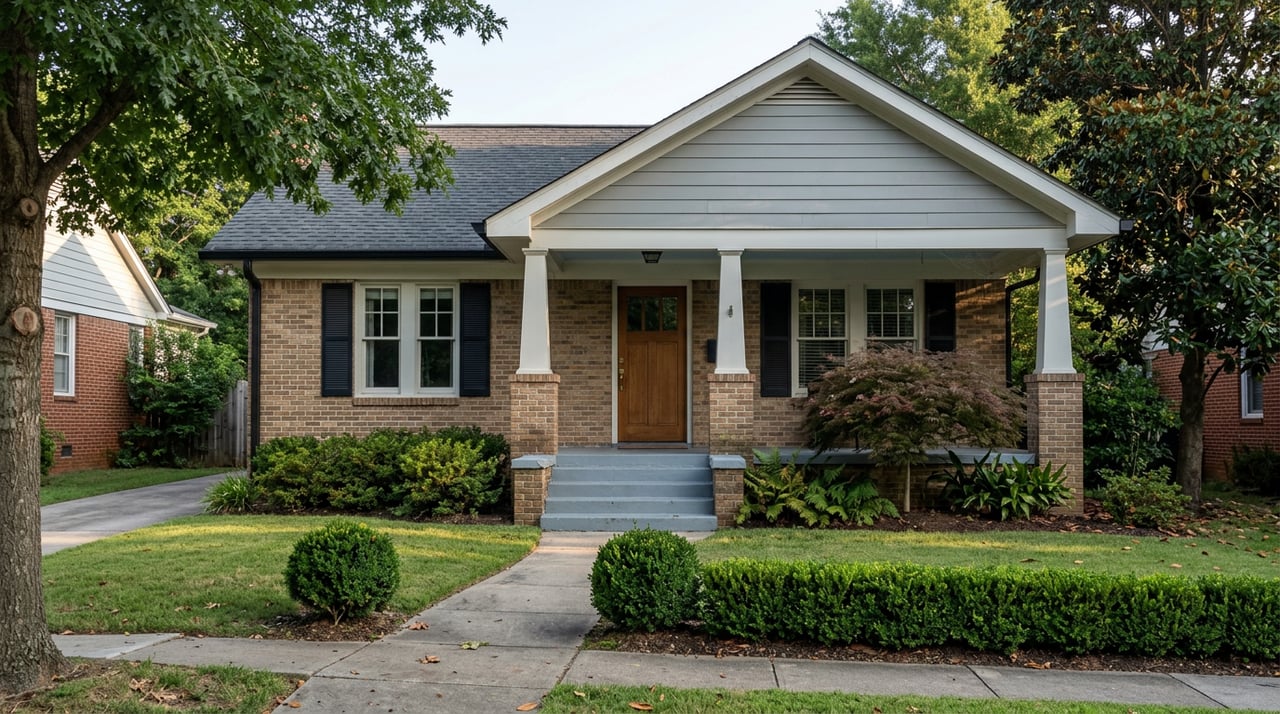
Walk the corridor and the reason is visible. Augusta Road, still called that by longtime residents even though the street signs say Augusta Street, has been one of Greenville's most walkable, most lived-in stretches since the 1850s. Brick Street Cafe has anchored a corner of it since 1995. Augusta Grill has built a reputation on consistency rather than reinvention. The Vista, run by the Rick Erwin Dining Group at the corner of Augusta Street and East Faris, draws a regular happy hour crowd Monday through Friday. In late 2024, Augusta Street Market opened in the former Tasty as Fit space, a scratch-made deli and neighborhood market built by chef Joshua Griffin and owners Nick Petracca and Shane Taylor, sourcing coffee locally and pulling products through the Swamp Rabbit Food Hub.
Augusta Circle Elementary has operated on the same site since 1923. Tudor cottages, Colonial Revival houses, Cape Cod bungalows and craftsman-style homes sit close together on modest lots, the kind of housing stock that turns over more often precisely because it spans a wider range of sizes and price points than a neighborhood built entirely around larger custom homes. A rising volume of these smaller trades pulls the median down even as the most expensive homes on the street hold their value. That is a market getting more active, not a market losing ground.
North Main's story runs the other direction. The median climbed 10.5 percent and price per square foot rose 27.3 percent, both signs of buyers paying more for less space, which is exactly what happens when supply tightens faster than demand does. Recent counts have put active North Main listings in the low double digits against roughly 53 homes selling there in a typical year. That ratio, a dozen or so homes for sale against dozens sold annually, means most of the buying happens through word of mouth and quick decisions rather than patient browsing.
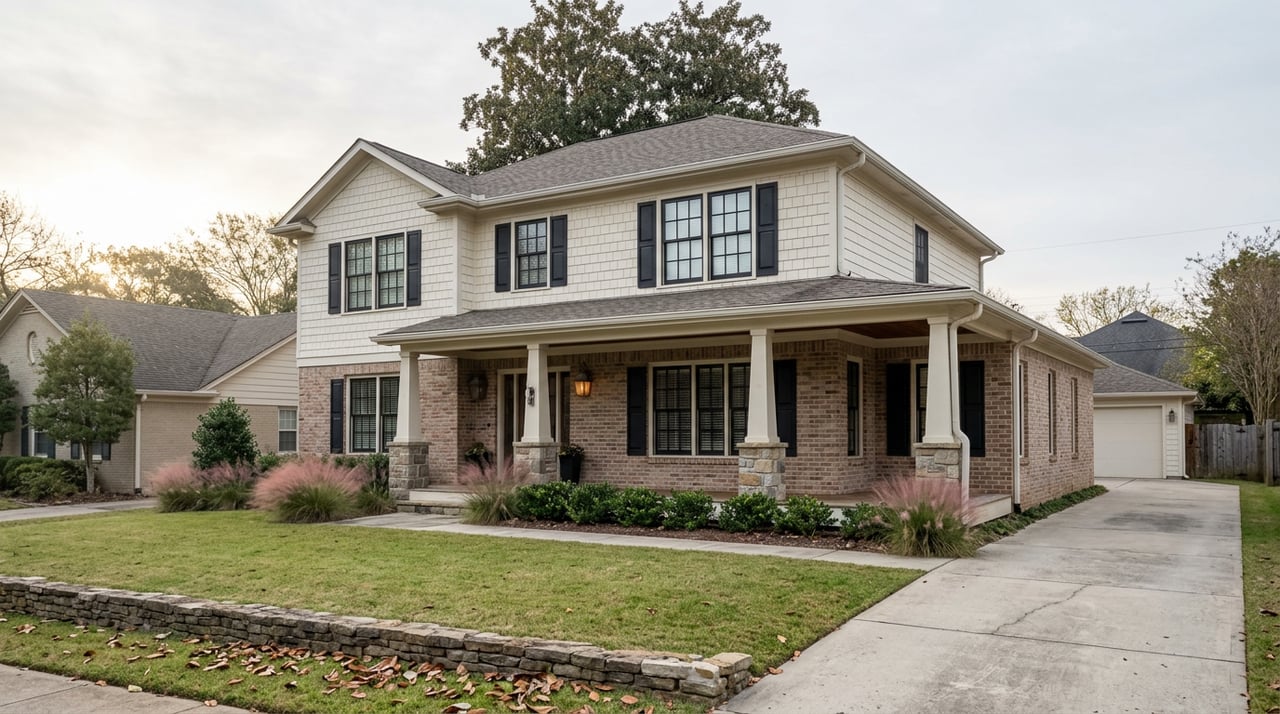
The neighborhood's draw is straightforward. Most homes sit within a five to ten minute walk of Main Street, with Falls Park on the Reedy and the Swamp Rabbit Trail close enough to reach on foot or by bike. The Earle Street Historic District carries much of the neighborhood's identity, with residents who have stayed put for years and a housing stock ranging from 1940s brick bungalows to brand-new custom builds. Stone Academy Elementary sits inside the neighborhood boundary.
Change is coming to the retail side. The long-vacant 505 North Main Street property, home to a Bi-Lo grocery store decades ago, is set for an $18 million redevelopment into new storefronts, restaurants, and improved walkways along West Park Avenue, with city officials framing it as filling a gap in daily-life convenience rather than adding another high-rise. Greenville City Councilman John DeWorken, describing the project, called it a genuine asset to the surrounding neighborhood. Renovations were slated to start in the late spring and early summer of this year, with completion targeted by city officials for summer 2027. Separately, Norden on Stone, a Scandinavian-inspired townhome community built by BLOM Design Studio and Cobblestone Homes, is adding new construction inventory meant to bridge North Main's older residential blocks with the energy of downtown. Both projects add future supply, but neither changes the math for a buyer shopping this year, when the active listing count stays thin.
Treating Augusta Road and North Main as equivalent because they share a median is where buyers get tripped up. What the number is actually telling you:
Does a falling median on Augusta Road mean home values are actually dropping? Not necessarily. A falling median with rising sales volume usually points to a change in what is selling, not a broad decline in what any individual home is worth. Ask for recent comparable sales on the specific block or lot size you are considering rather than relying on the neighborhood-wide median.
Why are there so few homes for sale in North Main if it is this desirable? The neighborhood's footprint is largely built out already, with a housing stock that spans decades of construction but very little vacant land left to develop. New projects like Norden on Stone add supply gradually, but they arrive in small batches rather than all at once, which keeps existing inventory tight in the meantime.
Should I expect the same inspection and closing timeline on both streets? Timelines depend more on the individual home's age and any renovation history than on which street it sits on, though older homes on both Augusta Road and North Main, some dating to the 1920s through 1960s, tend to warrant a closer look at systems and structural updates regardless of price point.
A matching median price is a starting point for a conversation, not the end of one. If you are weighing Augusta Road against North Main, or trying to figure out where else in Greenville your budget behaves the way you expect it to, Kiersten Bell + Co spends its days tracking exactly this kind of block-by-block difference. Let's Connect and talk through what your number actually buys on the street you have in mind.
Stay up to date on the latest real estate trends.
October 22, 2026
October 15, 2026

October 8, 2026
Including Falls Park, TD Saturday Market, and Swamp Rabbit Trail.

October 8, 2026
The Best Breakfast Spots to Fuel Your Move to Greenville.

October 8, 2026
October 1, 2026
September 24, 2026
September 17, 2026

September 10, 2026
We have always prided ourselves in our honesty, loyalty and genuine personality. Let us guide you through your journey of finding the perfect home for you. Bring on the questions and let's go house hunting!